Autonomous GTM Hack with OpenAI and AGI House
We teamed up with AGI House, OpenAI, Vultr and Tavily on the Autonomous GTM Hack in San Francisco: a day of builders shipping GTM systems that run themselves.


In short
A day at AGI House in San Francisco with OpenAI, Vultr and Tavily. The goal: show what a go-to-market looks like when agents run it, from product to revenue. Workshops in the morning, then a hackathon with OpenAI Codex credits across three tracks.
We teamed up with AGI House, OpenAI, Vultr and Tavily on the Autonomous GTM Hack at AGI House in San Francisco. The brief on the poster was simple: build GTM systems that run themselves.
The goal
Most go-to-market is still stitched together by hand: a list here, a sequence there, posts and reports that someone has to remember to do. The goal of the day was to show what it looks like when agents run that loop instead, from a product all the way to revenue: find the market, choose the move, ship it and learn from the result.
We wanted builders to leave with something running, not a slide. That is why the day ended in a hackathon.
The workshops
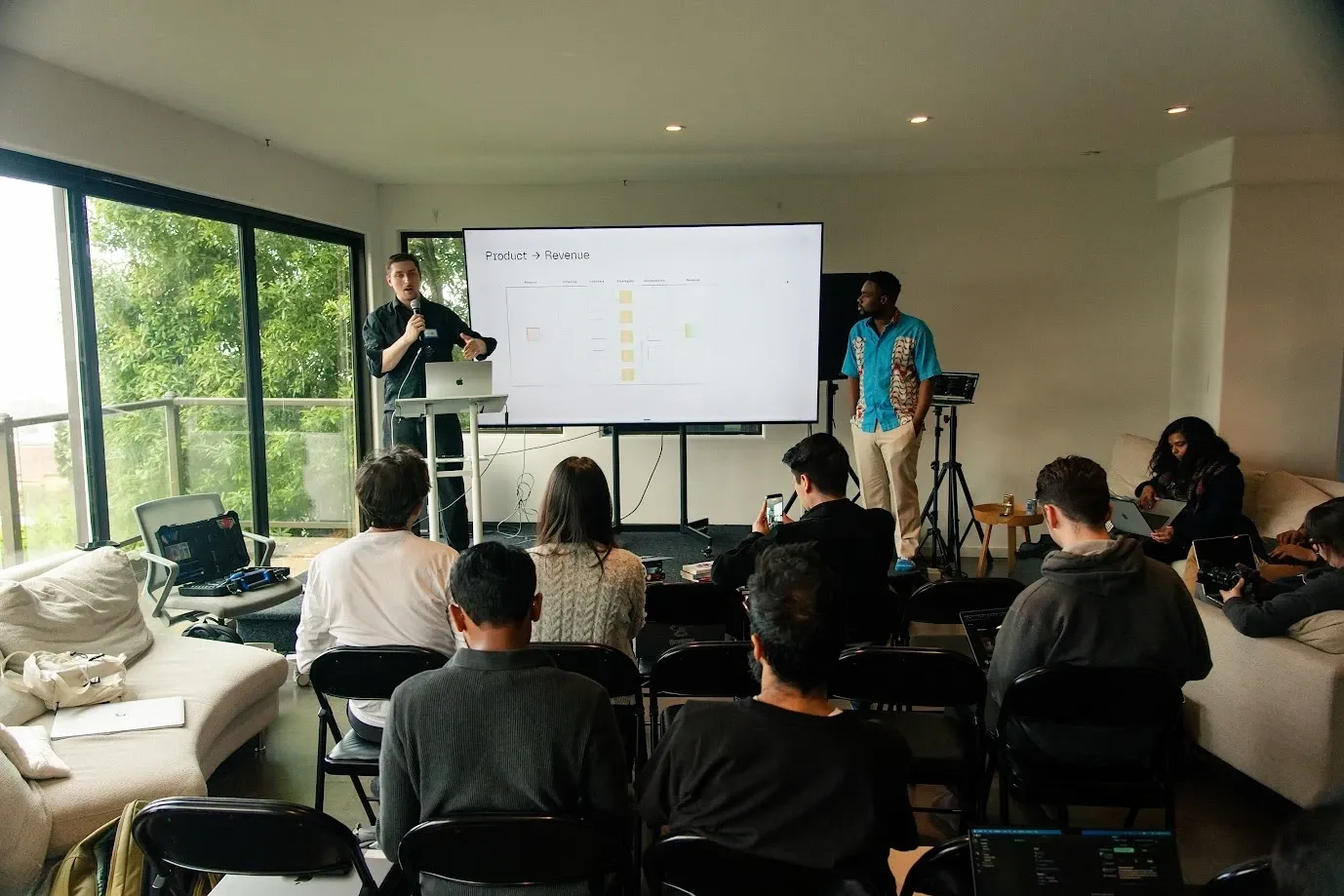
The morning was talks from people working on AI research and GTM, including a virtual session from Stanford professor Hamza Farooq. My talk, Product → Revenue, walked through the steps between a product and its revenue, and which of them agents can already run.
The hackathon
In the afternoon, teams built with OpenAI Codex credits across three tracks. Each one is a piece of an autonomous GTM engine:
- GTM intelligence benchmarks: how well an agent understands a market, measured so you can compare one against another.
- Content engine agents: agents that research, write and publish, so buyers find you.
- Adaptive sales agents: agents that reach out and learn from every reply.
Why we did it
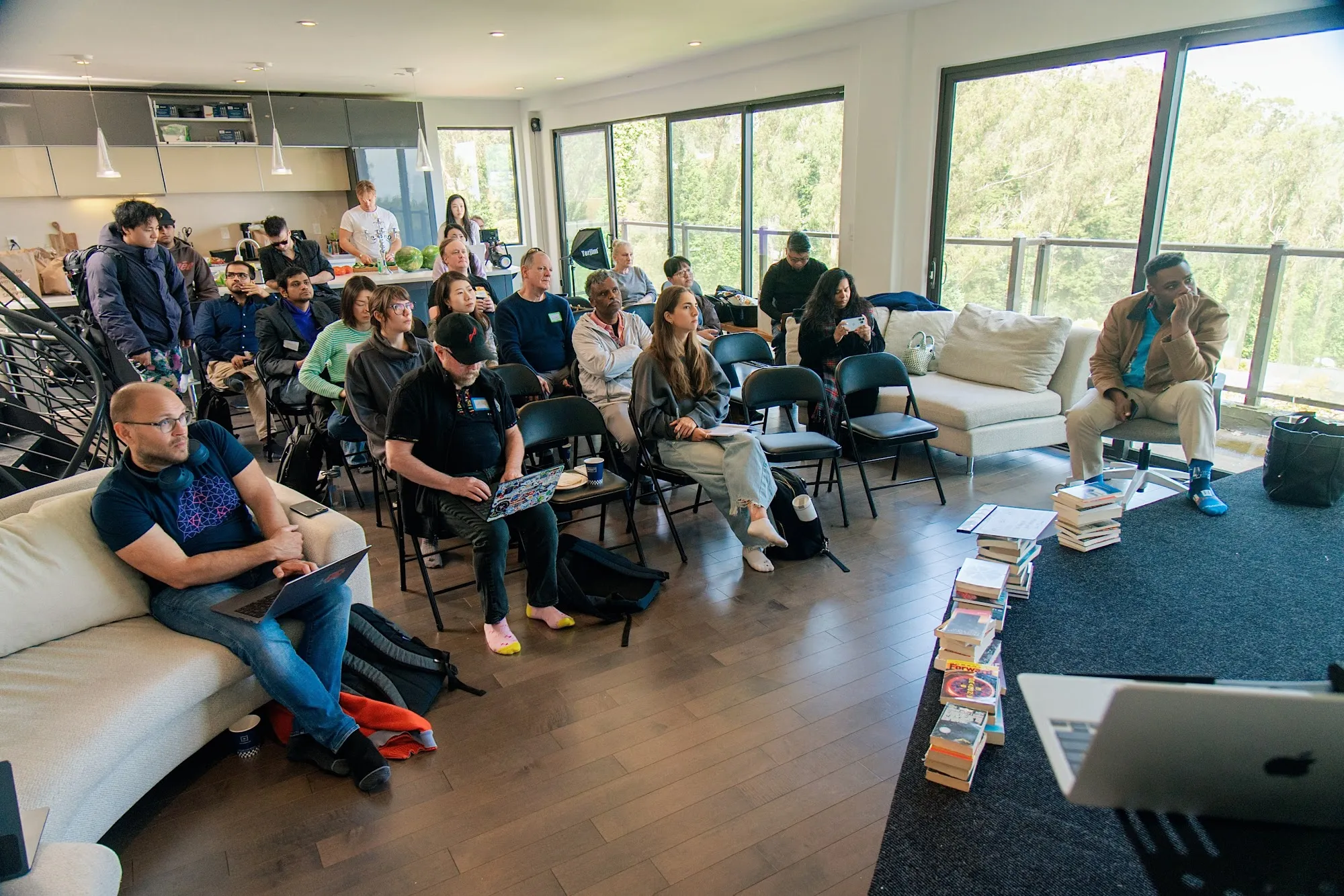
It is the same problem we work on every day: a go-to-market that runs as one system and gets better with every result. A room of builders shipping pieces of that in a single day is the best sign yet of where GTM engineering is going.

Book a strategy call with our GTM engineers
We look at your market together and show you the moves worth making first, on your own or with our engineers.
Resources
Keep reading

What is a GTM engine? Agents vs engine vs CRM vs GTM engineer
What a GTM engine is, how it differs from a CRM, an agent and a GTM engineer, and the loop it runs on.
 Roman J. Georgio

How to actually use agents for B2B lead generation
A walkthrough of the agents we run for lead generation, and where they fit.
Roman J. Georgio
Alpha: The Economic Driver of GTM
Every revenue channel has a period where it is underpriced, underexploited, or not yet saturated. Whoever finds that window first gets an advantage, whoever executes it better turns the advantage into revenue, and whoever systemises it makes the whole thing repeatable. Traders have had a word for this for a long time, and alpha turns out to be the most useful way to think about gtm as well.
Roman J. Georgio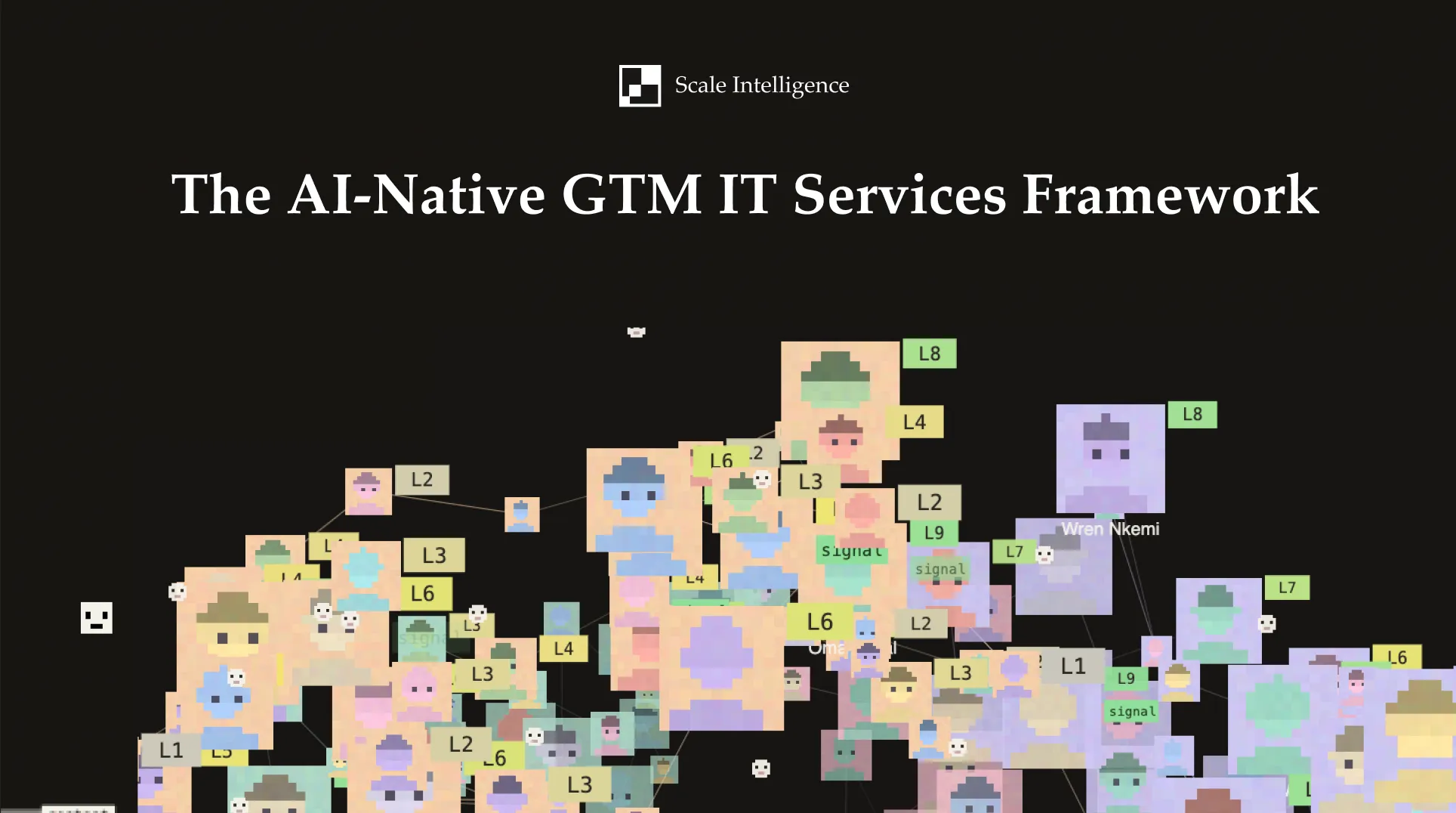
The MSP AI Maturity Framework: How AI-Native Is Your GTM?
Most teams calling themselves AI-native are at L1. It's the same scattered go-to-market, just typing faster. The AI Maturity Framework has six rungs: Manual, Assisted, Integrated, Owned, Connected, Autonomous. Each rung has a specific wall above it. No context graph, no named owners, no command centre, no trust in long-horizon loops. Locate your rung honestly, find the wall directly above you, and build the one thing that clears it. Adding more agents is the generic wrong move at every level.
 Sebastian Lourenço