The GEO Stack: How to Get Cited by ChatGPT, Claude, and Google

Sebastian Lourenço
TL;DR
GEO isn't SEO with a new name. It requires a fundamentally different content architecture. Getting cited by AI engines means being authoritative, structured, and technically accessible. We break down the exact stack: concrete data, E-E-A-T signals, answer-first writing, technical indexability, and platform-specific tactics for ChatGPT, Claude, and Google AI Overviews.
How to get results from AI Search
Recently, I attended a Frontier agentic GTM event in New York for Tech Week. At this event, I presented my web thesis comparing the similarities between a spider building its web and how an organisation should address AI Search...
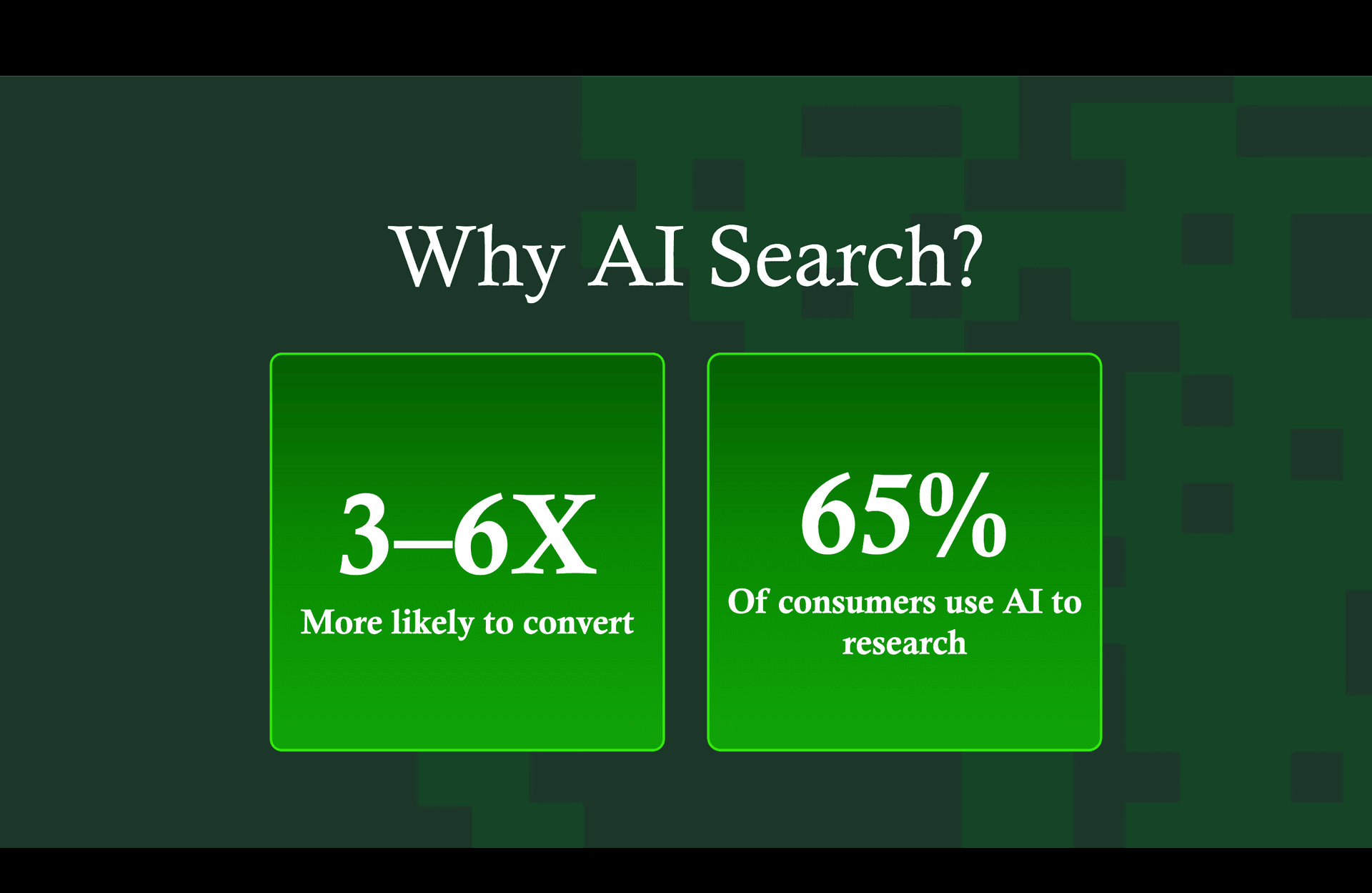
I know what you're thinking: YOU can't be serious. In what world would a spider building its web in any way relate to an AI Search strategy? First, I took a deep breath, as public speaking, especially in front of a room full of founders, GTM engineers, and VCs, can be intimidating. Once I was in the zone, I set the scene, dumping statistics on why AI Search is important and how having a strategy can make a massive impact by greatly increasing reach. Prospects are researching with LLMs like Perplexity, ChatGPT, and Claude; a business optimising content for AI citations is 3-6x more likely to convert a high-intent opportunity over traditional SEO, ads, and Google search; this fact was even more impressive by the fact that 65% of consumers today use AI to research.
The Spider Thesis
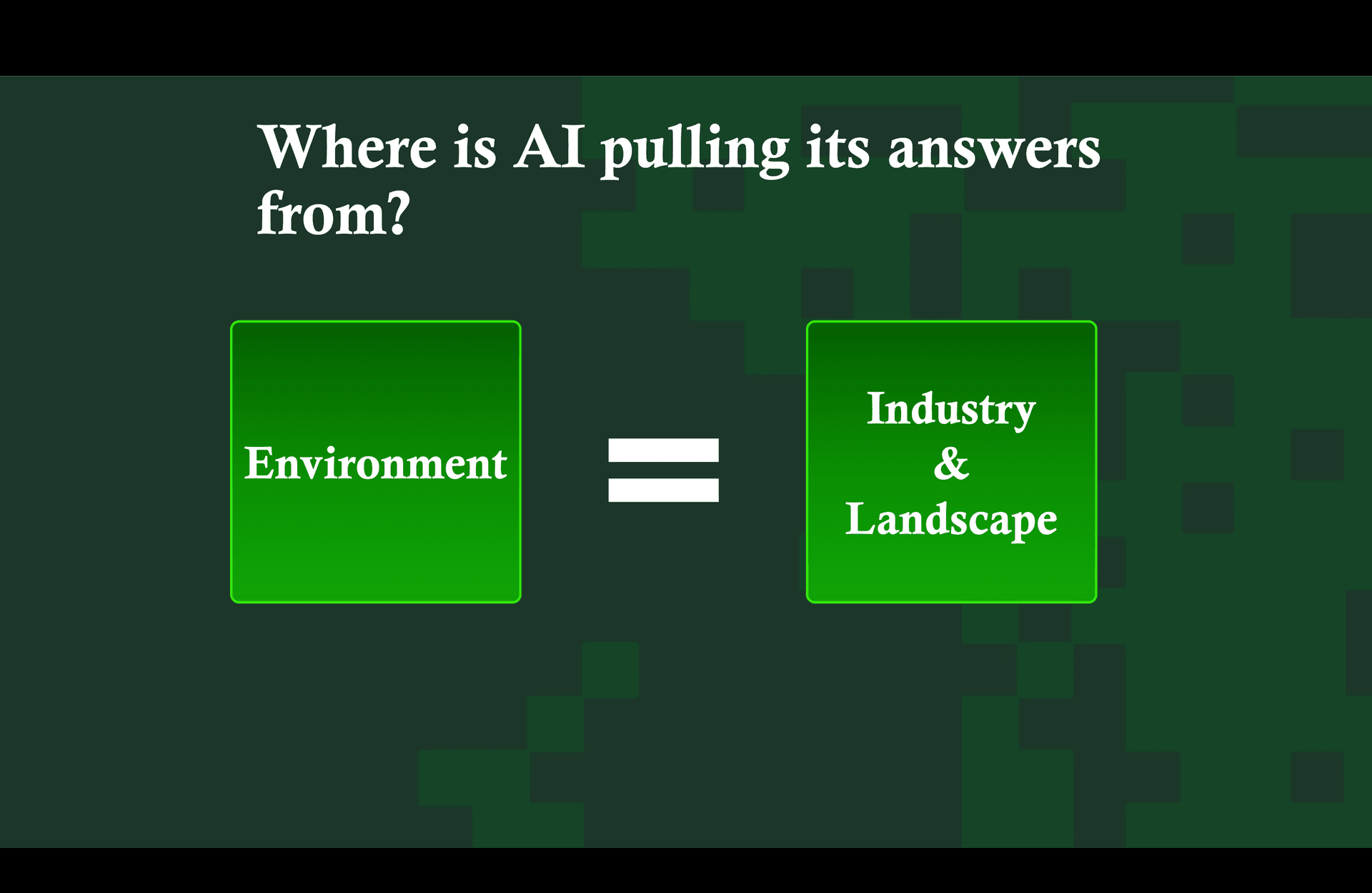
After my opening gambit, I explained similarities: a spider needs to consider multiple factors prior to building a web. First, the spider would check its environment: Are there any other spiders? How big are the other spiders' webs? Where are the gaps?
This maps directly to the industry and landscape. Who are the big players? What topics do my competitors own? Are LLMs citing my competitors when encountering a gap in knowledge? All very sensible questions to be asking yourself when considering a robust GEO plan.
I sensed the group slowly increased in engagement: a few nods at the back, a couple of head tilts at the front. Anyone can stand up and present figures, but by utilising the spider analogy, members in the crowd naturally fell into a trance.
My index finger moved us to the next slide. Covering the second logical component to building a stable web. A spider examines the stability of the web by factoring in the anchors holding the web in place; one wrong post and the entire web can collapse. Campaigns for an organisation are where the stability is constructed; in my example, I explained that LLMs need to effortlessly break down content.
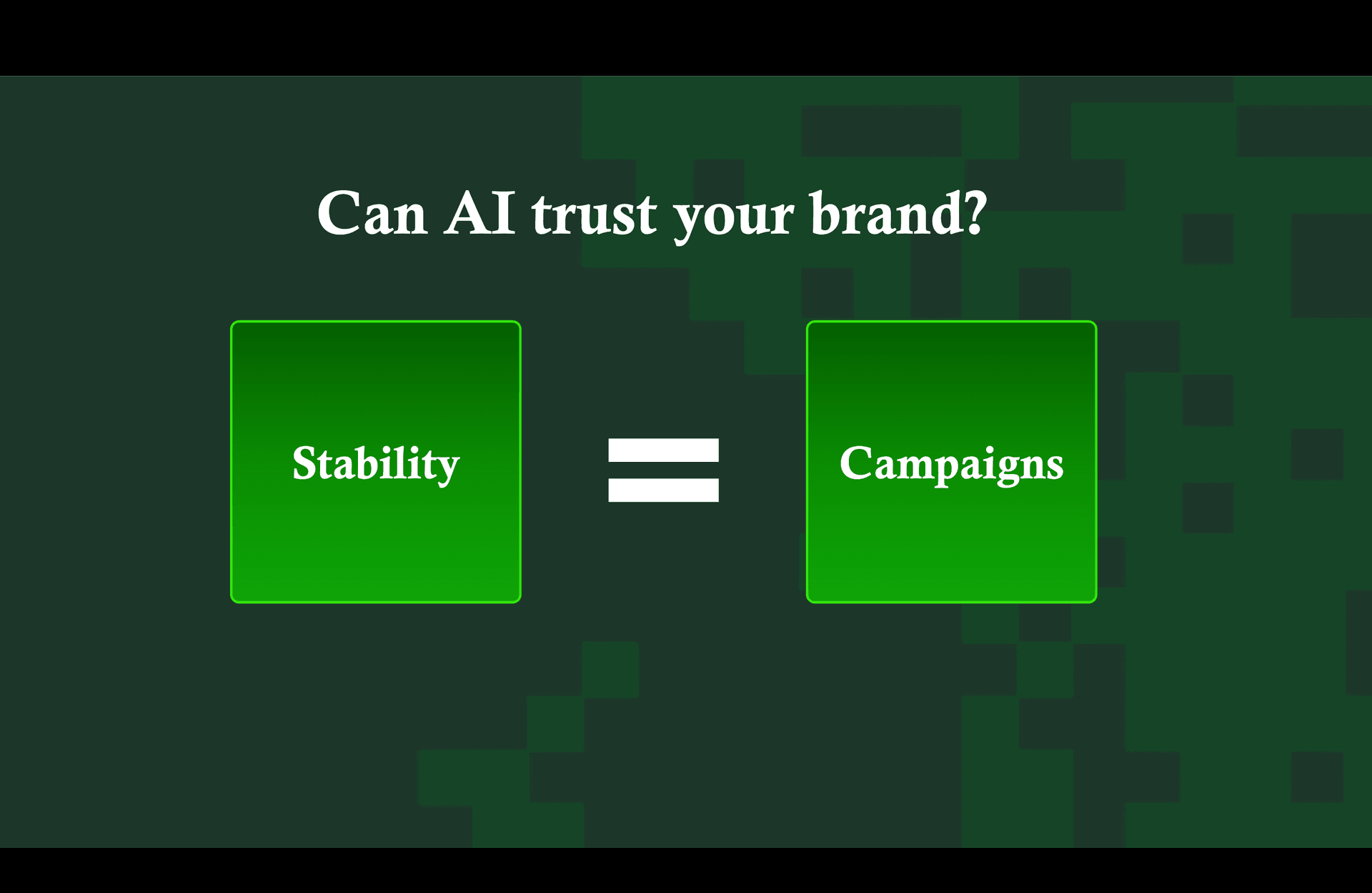
I asked everyone: How easy is it for AI to find your brand? Almost immediately, a hand went up in the far left-hand corner: "Does this mean I need to rebuild all of my content for AI to understand?" The room fell silent. I calmly responded: when an organisation develops content, usually they don't consider an LLM; in some cases, yes, you will need to revamp, but moving forward, keep in mind that an LLM scrapes the material.
Now, the crowd stood reassured of my expertise in this field. I continued by introducing my closing slides. Finally, a spider only intends to build in high-traffic areas; in parallel, a business should focus on positions where invested prospects are searching. I revealed my slide demonstrating "High Traffic = Funnel Positioning". A spider deliberately evaluates, "What is the likelihood of success by deploying a web in this exact location?" Consistently, I witness brands going wrong at this exact point.
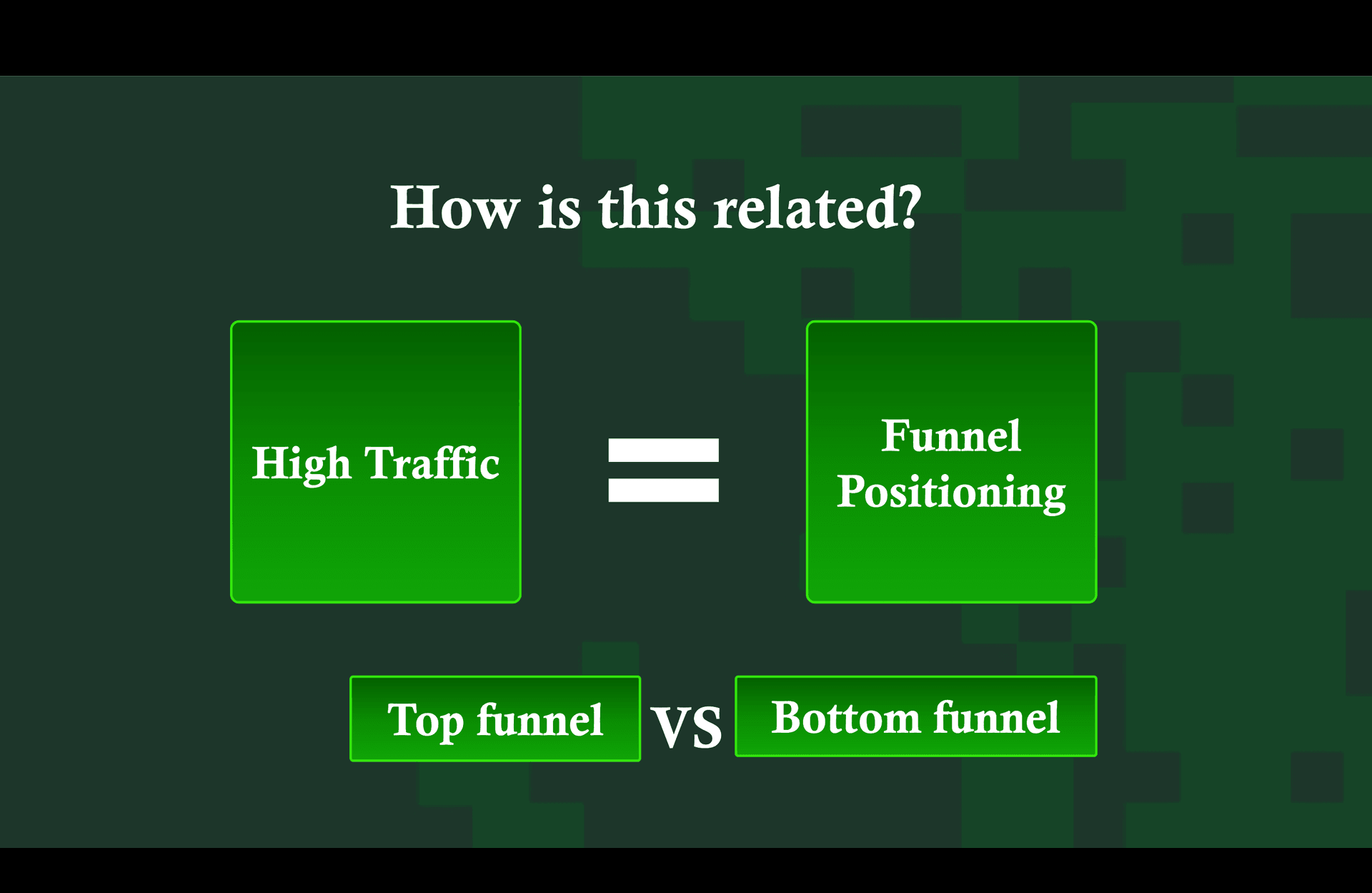
No clear evaluation of what audiences are captured when deploying unstructured campaigns, barely factoring in at what point of the sales funnel my prospect is reading the material.
FAQ
What Happens When You Don't Have An Optimised GEO Strategy
Swiftly, my PowerPoint animated a red web attracting many flies, simulating when a competitor focuses on building a strong, optimal strategy, opportunities find rivals first, leaving their brand invisible. Gradually, the web transformed from a deep red to a glowing white as I explained that this is where Scale Intelligence supports efforts to optimise content for AI Search.